
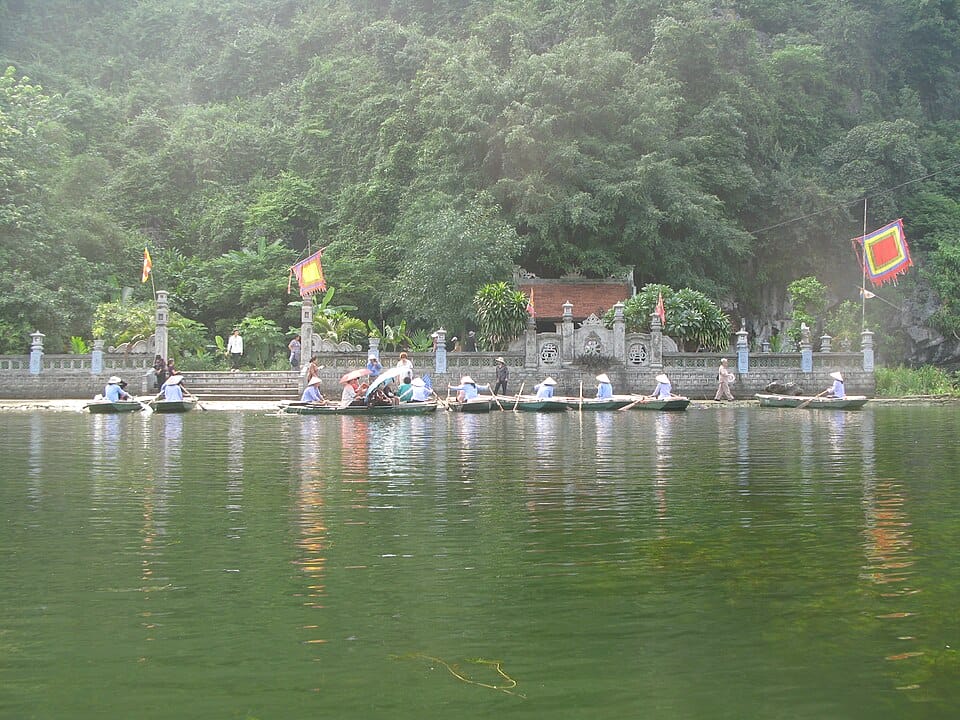
Ninh Binh in One Day – From Hoa Lu Ancient Capital to Tam Coc Boat Ride
Some places ask for a week.
Ninh Binh asks for attention.
Just over an hour from Hanoi via expressway, this former imperial capital compresses dynastic history, limestone geology, river landscapes, and rural rhythm into a single, manageable day. But only if you structure it correctly.
This is not a checklist itinerary. It is a layered route—moving from political origins at Hoa Lu to the waterbound calm of Tam Coc, ending with a quiet ascent at Bich Dong Pagoda.
Shift your role from casual traveler to deliberate planner, and the day unfolds with surprising coherence.
Quick Summary Table
| Time | Activity | Location |
|---|---|---|
| 8:00 | Depart Hanoi | Hanoi to Hoa Lu |
| 9:30 | Visit temples of King Dinh and King Le | Hoa Lu Ancient Capital |
| 11:30 | Lunch with local specialties | Tam Coc area |
| 13:30 | Boat ride through caves | Tam Coc |
| 15:30 | Cycle to pagoda | Bich Dong Pagoda |
| 16:15 | Return to Hanoi | Expressway |
8:00 – Leaving Hanoi with Historical Context
The drive from Hanoi to Ninh Binh takes just over an hour via expressway. This accessibility changes everything. You are not venturing into remote highlands. You are entering what was once the political heart of Vietnam.
In 968, Dinh Bo Linh unified the country after defeating twelve warlords and established the first centralized feudal state, choosing Hoa Lu as the capital. The site later connected three dynasties: Dinh, Le, and Ly.
That political density gives Hoa Lu more than scenic appeal. It gives it narrative gravity.
9:30 – Walking the Grounds of Hoa Lu Ancient Capital
Hoa Lu Ancient Capital sits in Truong Yen Commune, Hoa Lu District. After parking and purchasing entry tickets, you enter a protected heritage zone.
Two main temples anchor the complex:
- Temple of King Dinh
- Temple of King Le
The Temple of King Dinh occupies approximately 5 hectares within a specially protected zone. It follows the traditional “noi cong ngoai quoc” architectural layout—an inner character-shaped structure enclosed by an outer perimeter, facing east. In front rises Ma Yen Mountain, shaped like a saddle. On this mountain lies the tomb of King Dinh.
The geometry is intentional. Mountains functioned as natural fortifications. The landscape itself was political defense.
Inside the temples, carved wooden beams and stone courtyards frame ancestral altars. Even without dramatic storytelling, the space carries weight. This was the birthplace of centralized governance in Vietnam.
One travel writer once remarked that old capitals are never truly quiet—they are simply waiting to be interpreted. Hoa Lu fits that description.
Beyond the temples, the surrounding rice fields soften the atmosphere. Here, you can participate in a rural activity—riding a water buffalo, wearing a conical hat, walking slowly through open fields. It is theatrical, yes, but it also reflects an agricultural continuity that has shaped this region for centuries.
11:30 – Transition to Tam Coc and Local Cuisine
The drive from Hoa Lu to Tam Coc takes about 25 minutes by car. The shift is subtle but important. Political history yields to water and limestone.
Lunch options cluster around Tam Coc. Two dishes define the area:
- Crispy rice (com chay)
- Mountain goat meat (thit de nui)
Crispy rice here is served with a rich sauce—typically made from beef or pork organs sautéed with onion, straw mushrooms, carrot, and tomato. The sauce is glossy, aromatic, slightly fatty. It transforms what could be simple fried rice crust into a regional specialty.
Mountain goat meat reflects the limestone terrain. Goats graze on rocky slopes, influencing texture and flavor. The dish is usually prepared grilled or steamed, served with herbs.
This meal is not filler between attractions. It connects cuisine directly to geography.
13:30 – Tam Coc and the Ngo Dong River
Tam Coc is often referred to as “Ha Long Bay on land.” The comparison is visual: limestone karsts rise dramatically from flat plains. But Tam Coc offers something different from its coastal counterpart—proximity.
After purchasing boat tickets, you board a small wooden rowboat on the Ngo Dong River. The route moves through expansive rice fields before narrowing into three natural caves. The water is calm. The paddling rhythm sets the tempo.
Passing through the caves, stalactites hang low above the boat. The temperature drops noticeably. Outside again, fields stretch outward in layered greens.
Birdlife appears intermittently—white egrets lifting from the paddies. Aquatic plants ripple below the surface.
The experience is not adrenaline-based. It is spatial immersion. Limestone mountains form a ring around the valley, creating a contained ecosystem.
This is where Ninh Binh’s landscape becomes architectural—nature arranged in vertical and horizontal contrast.
15:30 – Cycling to Bich Dong Pagoda
From Tam Coc to Bich Dong Pagoda is approximately 2.5 kilometers. Many visitors take a car. A planner chooses a bicycle.
Cycling this stretch allows direct engagement with rural life—farmers tending rice, small bridges crossing irrigation canals, children returning from school.
Bich Dong Pagoda is built into a mountainside. Its structure unfolds in levels—lower, middle, and upper pagodas connected by stone steps. The integration of temple and cliff demonstrates a Vietnamese approach to sacred space: not dominating nature, but embedding within it.
Climbing toward the upper pagoda rewards you with elevated views of surrounding fields and river channels. It is a quiet ending to a layered day.
Things the Media Doesn’t Tell You
Most headlines present Ninh Binh as “scenic” or “peaceful.” That is true—but incomplete.
First, timing matters. Tam Coc’s rice fields change color seasonally. To verify conditions before visiting, review recent Google Maps photos or YouTube vlogs. Field color dramatically affects visual experience.
Second, boat traffic fluctuates. During peak weekends, the river can feel busier than expected. Check recent reviews to assess crowd density trends.
Third, cycling from Tam Coc to Bich Dong is safe but weather-dependent. Midday heat can be intense. Watching recent traveler TikToks gives realistic insight into road conditions and shade coverage.
Fourth, Hoa Lu’s historical significance is often reduced to photo stops. Reading negative reviews can reveal common oversights—such as insufficient time spent understanding the Dinh and Le dynasties.
Switching from traveler to planner means:
- Allocating sufficient time at temples before moving to Tam Coc.
- Checking weather forecasts for optimal boat conditions.
- Confirming bicycle rental availability in Tam Coc.
- Reviewing seasonal rice cycles via local travel groups.
If this real-world data is not gathered, the day risks becoming rushed rather than resonant.
Community Voices
Online forums frequently describe Tam Coc as “unexpectedly tranquil” compared to larger coastal attractions. Others mention that cycling between sites becomes a highlight rather than the caves themselves.
Visitors from Europe often compare the limestone formations to karst regions in Slovenia or southern France—but note that the density of rice agriculture in Ninh Binh creates a different texture.
American travelers often comment on how close the region is to Hanoi, expressing surprise that such a distinct landscape exists within a short drive.
A Multidimensional Perspective
Ninh Binh is not merely a scenic detour from Hanoi. It is a convergence point:
- Political unification at Hoa Lu
- Agricultural continuity in rice fields
- Geological drama in Tam Coc
- Spiritual integration at Bich Dong
In one day, you move from throne to tomb, from river cave to mountain pagoda, from expressway to bicycle lane.
The experience is efficient without feeling compressed. Structured without feeling rigid.
And somewhere between the carved wooden altars of King Dinh and the echo inside Tam Coc’s caves, you begin to understand why this former capital still commands attention.
Cycling Tam Coc to Bich Dong – Experiencing Ninh Binh Beyond the Bus Tour.
Ninh Binh one day, Hoa Lu Ancient Capital, Tam Coc boat ride, Bich Dong Pagoda, Hanoi day trip, Ngo Dong River, King Dinh temple, King Le temple, Ninh Binh cycling route, Tam Coc caves, Vietnam ancient capital, Ninh Binh itinerary, com chay specialty, mountain goat Ninh Binh, Hoa Lu history
